HEPO — Software for People, Culture and Processes
Understand and develop organizational culture, coordinate business processes, and explore work through simulation and games on one software platform.

Understand the boundaries between cultural readings, personal participation records, evidence access, and the human decisions that follow.
HEPO's P&C software is designed to make cultural patterns available for responsible interpretation and development. Its readings concern practices within a defined scope; they are not rankings of employees or automatic judgments about a person's worth.
That purpose needs concrete boundaries in use: what evidence enters, what the reading represents, who can inspect it, and who decides what happens next. This page explains those distinctions for employees, People & Culture leaders, representatives, and technical evaluators.
A team examining follow-through in an approval cycle needs a definition of the practice, the relevant work records, and a meaningful period of review. It does not need an unrestricted account of everything each colleague does.
Observation scopes establish which traits and populations are being examined, with the relevant thresholds and recipients. The organization and its implementation partner configure the use around that question. A record's existing presence in a system is not a reason to include it in every analysis.
The resulting pattern might concern repeated delays at a handoff. Understanding it may require discussion of workload, dependencies, and changed commitments. A named person's presence in an underlying work record does not make the cultural reading a verdict about them.
| Information | What it is for | What it must not silently become |
|---|---|---|
| Cultural observations and indices | Examining defined team and organizational patterns | A ranking of employees by cultural worth |
| Personal programme and participation records | Following enrolment, assigned work, milestones, and earned recognition | An automatic personality or professional-competence assessment |
| Voluntary wellbeing contributions and assessments | Understanding reported experience within an agreed use | Hidden evaluation unrelated to the purpose explained to participants |
HEPO contains employee records and personal development journeys. Those facts are compatible with the P&C boundary when their roles and permissions remain clear. A claim that the entire platform contains no personal records or numerical progress would obscure how development actually works.
Games & Gamification can provide activities and feedback. Their results do not establish an individual's character. Campaign recognition also has its own approval and visibility arrangements, separate from cultural assessment.
The Recommendation Framework produces a proposal from configured signals and conditions. The recipient examines its basis and decides how to respond. The lifecycle records acknowledgement, action, completion, dismissal, or expiry.
A recommendation about people does not authorize itself. A programme assignment, promotion decision, or other consequential response requires the appropriate human authority and context. The software's role is to support that decision and preserve its trace, rather than replace the person responsible.
An aggregate reading alone also cannot select an individual for action. A leader needs evidence appropriate to the actual decision, with the relevant people and process involved.
The evidence path connects definitions, observations, readings, and recommendations. The rule view identifies why a proposal appeared. Governance records help explain who changed configuration and how a response was handled.
Traceability does not mean every participant should see every source record. Access to evidence, configuration, programme information, and wellbeing contributions must follow the role and purpose of the use. A useful demonstration shows both what an authorized reviewer can inspect and what another role cannot access.
For example, reviewing the team's handoff pattern and viewing an employee's programme are different activities. Their shared context does not make their audiences identical.
HEPO's deployment approach keeps the platform and AI inference on the customer's infrastructure. The organization and implementer establish the agreed sources, integrations, access arrangements, and operational configuration.
Local processing answers where that work occurs. It does not, on its own, settle whether a source, observation scope, or proposed use is appropriate. Those choices remain part of the organization's responsibility for the deployment.
Architecture and security explains the technical context in more detail.
| Question | What the organization should be able to examine |
|---|---|
| What is this reading about? | The definition, observation scope, period, and represented group |
| Does it grade or rank individuals? | The distinction between cultural readings and personal development records |
| What happens when a recommendation appears? | The named decision responsibility, permitted actions, and response history |
| Can the basis be inspected appropriately? | The evidence and rule trace, together with access restrictions |
| Where does processing take place? | The actual deployment and agreed integration boundaries |
These questions turn the trust position into something people can examine. The account should be checked against the configured deployment, rather than treated as proof that no extension or future change could ever violate its purpose.
The organization owns the purpose and decision responsibilities. Employees and their representatives need an understandable account of the use. Consultants help connect the method to that conversation; implementers configure the evidence and access; the delivery partner coordinates the implementation and its review.
When the question, evidence, or scope changes, revisit those arrangements. Human authority and a clear explanation of the reading remain part of the work, not a statement confined to the first presentation.
The P&C method → · Flourish & Wellbeing → · People & Culture overview →
Understand and develop organizational culture, coordinate business processes, and explore work through simulation and games on one software platform.
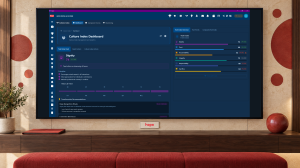
Six connected software modules help you define cultural traits, examine evidence, interpret patterns, organize development, and review outcomes.
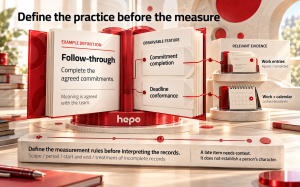
Adapt and author the traits, observable features, and evidence definitions that HEPO uses to examine your organization's working culture.

Evaluate scoped operational evidence against your trait definitions and inspect the observations, confidence, and source context that feed culture readings.
Manage the people, work, events, communication, knowledge, and relationships that support HEPO's three offerings alongside existing business systems.
The management method behind HEPO's six P&C modules: define meaningful practices, examine evidence, retain human judgment, and review development outcomes.
Design development campaigns, organize employees' programmes, and connect milestones, work, learning materials, feedback, and approved recognition.

Bring evaluated observations into composite cultural readings, examine trends and confidence, and identify patterns for a responsible person to investigate.
Connect voluntary check-ins, assessments, wellbeing indicators, recurring practices, and impact review to the next people-development decision.
Generate traceable proposals from configured signals and rules, review their basis, manage the response, and examine the resulting impact.