HEPO — Software for People, Culture and Processes
Understand and develop organizational culture, coordinate business processes, and explore work through simulation and games on one software platform.

Six connected software modules help you define cultural traits, examine evidence, interpret patterns, organize development, and review outcomes.
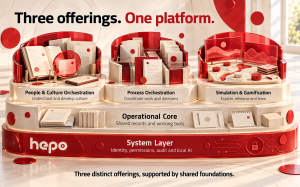
People & Culture Orchestration is the part of HEPO that helps an organization understand how people work together and organize their development. It connects six software modules: definitions of cultural traits, evidence evaluation, culture indices, recommendations, development campaigns and programmes, and Flourish & Wellbeing.
A People & Culture leader uses these modules to connect a management question to evidence and a possible response. The organization defines what matters, the software makes relevant patterns inspectable, and responsible people decide how to act.
Culture includes the repeated ways people communicate, keep commitments, recognize contributions, and make decisions. A values statement describes an intention. Understanding the working culture requires examining those practices and their context over time.
HEPO connects that examination to development work. You can establish a vocabulary, decide what evidence is relevant, inspect a reading, consider a recommendation, organize an activity or programme, and return to the evidence to review what changed. The software coordinates these steps; it does not determine what a good culture must mean for every organization.
Suppose a team wants to improve how colleagues support one another across a difficult handoff. This is an illustrative example, not a reported customer result.
First, the team and its People & Culture lead agree what useful collaboration looks like. They adapt the relevant trait definitions and decide which work and communication records can provide meaningful evidence within an agreed observation scope.
The evaluation engine reads that evidence against the definitions. A culture index brings observations together so the responsible person can inspect a pattern, its direction over time, and the confidence behind it. They can investigate the supporting evidence and discuss what the reading means with people who know the work.
A recommendation can suggest a response. The responsible person reviews its basis and decides whether to act. A development campaign can offer a shared activity; an employee's programme organizes participation, milestones, and progress. Later readings and wellbeing information help the organization review the outcome. They do not, by themselves, prove that the programme caused a change.
| Module | What someone does with it | What it contributes next |
|---|---|---|
| Trait Catalogue | Adapt supplied definitions and author traits, anti-traits, and observable features relevant to your work | A versioned vocabulary for evaluation |
| Evaluation Engine | Set observation scopes and examine evidence evaluated against those definitions | Observations with provenance and confidence |
| Culture Index | Inspect composite readings, trends, movement, and confidence | A pattern that can be investigated and acted upon |
| Recommendation Framework | Review a proposed response and its supporting evidence | A recommendation for a responsible person to accept, adapt, or decline |
| Achievement Campaigns & Programmes | Configure a development journey and follow participation, milestones, and recognition | Organized development work and recorded progress |
| Flourish & Wellbeing | Review outcomes and wellbeing in the context of the organization's aims | Evidence to inform the next development decision |
Campaigns define the available journey, including its enrolment arrangements. Programmes are the journeys people undertake through enrolment or assignment. Keeping these roles distinct helps a development team manage both the common design and individual participation.
The catalogue includes supplied definitions as a starting point. Your people can edit and extend them. Their meaning must fit your operation, and changes remain traceable through versioning.
Evidence comes from agreed operational sources, including HEPO's work, communication, calendar, and presence modules, and scoped integrations. The organization governs the population and subject being observed. A culture reading is an interpretation of available evidence, with limitations that matter to the decision.
Recommendations about people require human judgment. Cultural patterns must not become automatic verdicts on individuals. The Visibility Without Surveillance page explains the trust boundaries in detail. Our Approach develops the management and research foundations once you are ready to examine the method.
Process Orchestration supports the work and decision paths in which people participate. The two domains share evaluation capabilities and operational foundations, making it possible to consider people development and process improvement together.
Simulation & Gamification gives a group a place to explore a situation or practise decisions. Games can supply an activity within a development journey; campaigns and programmes retain responsibility for that journey and its recognition. A game's outcome is not a judgment of someone's character or professional competence.
The Operational Core and System Layer explain the records and shared services supporting this work. HEPO can use agreed information from existing systems while your ERP retains its role.
Your team and delivery partner establish the first question, the definitions needed to examine it, the evidence that can support it, and the people responsible for interpretation and follow-through. This makes the first use something the organization can evaluate in its own work.
Tell us what your People & Culture team needs to understand or develop.
Understand and develop organizational culture, coordinate business processes, and explore work through simulation and games on one software platform.
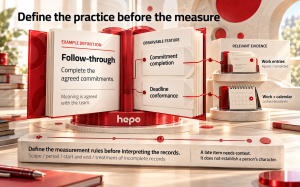
Adapt and author the traits, observable features, and evidence definitions that HEPO uses to examine your organization's working culture.
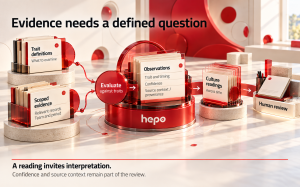
Evaluate scoped operational evidence against your trait definitions and inspect the observations, confidence, and source context that feed culture readings.
Manage the people, work, events, communication, knowledge, and relationships that support HEPO's three offerings alongside existing business systems.
Understand the boundaries between cultural readings, personal participation records, evidence access, and the human decisions that follow.
The management method behind HEPO's six P&C modules: define meaningful practices, examine evidence, retain human judgment, and review development outcomes.
Design development campaigns, organize employees' programmes, and connect milestones, work, learning materials, feedback, and approved recognition.
Bring evaluated observations into composite cultural readings, examine trends and confidence, and identify patterns for a responsible person to investigate.
Connect voluntary check-ins, assessments, wellbeing indicators, recurring practices, and impact review to the next people-development decision.
Generate traceable proposals from configured signals and rules, review their basis, manage the response, and examine the resulting impact.
