HEPO — Software for People, Culture and Processes
Understand and develop organizational culture, coordinate business processes, and explore work through simulation and games on one software platform.

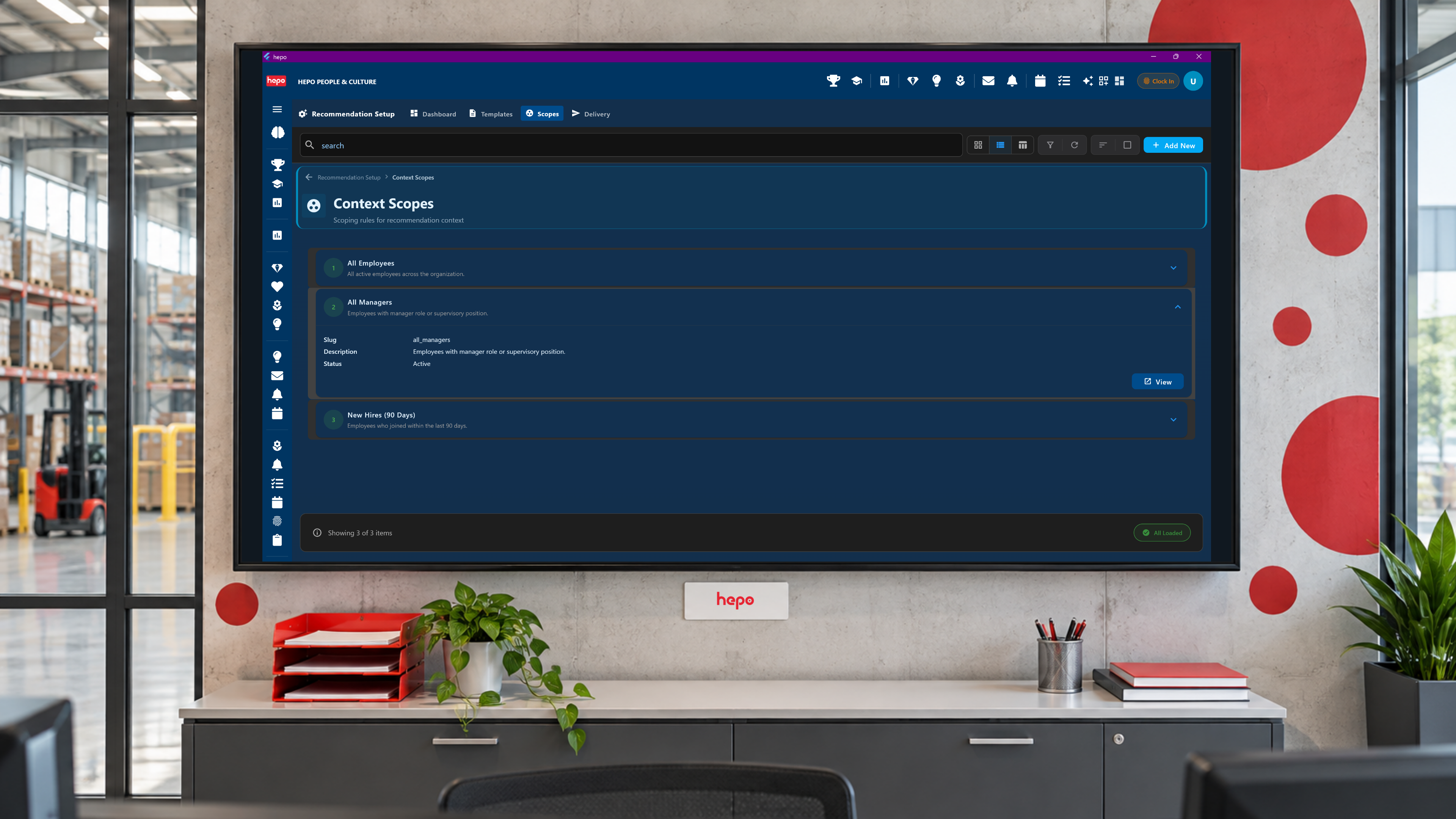
Generate traceable proposals from configured signals and rules, review their basis, manage the response, and examine the resulting impact.
The Recommendation Framework is HEPO's software for generating and managing proposed responses to cultural readings. It connects signals, conditions, templates, and scopes to a recommendation that a responsible person can inspect, acknowledge, act on, or dismiss.
The proposals come from the organization's configured rules and the platform's readings. Consultants can help design those rules; the running framework generates the instances. Each instance retains the basis on which it surfaced and the history of the response.
Consider the team reviewing reliable handoffs. The reading has declined across the agreed period. A configured rule can recognize the relevant condition and create a proposal to review the practice or organize development.
The owner examines the rule, its scope, and the supporting evidence. A changed workload or an unsuitable threshold may call for further investigation. If development is appropriate, the owner can choose a response and connect it to a programme. The recommendation does not make that decision on their behalf.
That gives the organization a record of more than an alert: what was proposed, why, who responded, what they chose, and what happened afterwards.
| Part | Its role |
|---|---|
| Signal source | Supplies a measurable condition from the platform's readings or activity |
| Condition | States the combination of signals and thresholds that should trigger attention |
| Template | Describes the recommendation and possible response |
| Context scope | Identifies the relevant audience or working context |
| Delivery profile | Governs how and when the recommendation reaches its recipient |
Signal definitions cover culture-index values and movement, containment-related conditions, campaign participation and milestones, and flourishing measures. The available signal and its configuration must fit the question being asked.
The starting rule examples include cross-trait divergence, a reversal persisting across periods, and a paired condition involving a falling trait reading and accelerating decay. These are examples of configurable conditions. A rule firing means its condition was met; the meaning of that condition still needs examination.
The rule view exposes the expression and the associated template, scope, delivery profile, priority, and validity. A recipient should be able to follow the proposal back through the reading to relevant evidence, within the permissions of their role.
Recommendation types provide a vocabulary for different responses: guidance, warning, encouragement, correction, learning, mentorship, policy, and escalation. Urgency and validity help distinguish what needs timely attention from what has become stale.
Delivery profiles describe in-app, email, push, and digest channels, with frequency, limits, and cooldowns. These are configuration choices for implementation; the existence of a channel option does not mean every deployment has connected it.
An instance can move from pending to acknowledged, in progress, and completed. It may instead be dismissed with a reason or expire when its validity ends.
Dismissal is a useful outcome when the recipient has context the triggering rule did not capture. Recording that reason helps the organization review whether the scope, condition, or proposed response should change. Acknowledging a recommendation is not the same as approving a programme or completing the proposed work.
People decisions remain human decisions. A recommendation can inform a development choice without becoming an automatic promotion decision, disciplinary action, or judgment of personal worth. The trust boundary →
The impact record can hold the earlier score, the later score, their difference, and an indication of detected behavior change. Together with the response history, this lets an owner examine whether the expected pattern moved after action.
The comparison is evidence for review, not proof that the recommendation caused the change. Other events, changing evidence coverage, and the timing of the review can matter. An unchanged reading is also useful: it may prompt the organization to examine the response, its implementation, or the rule that proposed it.
This information contributes to the wider Flourish & Wellbeing review and the next cycle of evaluation. Retuning remains governed work, rather than an assumption that the software automatically knows the right intervention.
The organization owns the rulebook, recipients, and decision responsibilities. Consultants help review starting templates and shape conditions that fit the operation. Implementers connect signals and configure delivery, validity, and access. The delivery partner supports the cycle from initial configuration through review of completed responses.
When the chosen response calls for structured development, Achievement Campaigns & Programmes give it milestones, participation, and progress. Other recommendation types can lead to other responsible actions; every proposal need not become a campaign.
Next: Achievement Campaigns & Programmes → · Return to the Culture Index →
Understand and develop organizational culture, coordinate business processes, and explore work through simulation and games on one software platform.

Six connected software modules help you define cultural traits, examine evidence, interpret patterns, organize development, and review outcomes.
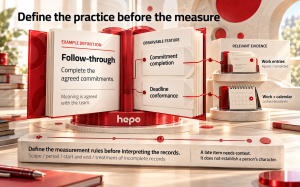
Adapt and author the traits, observable features, and evidence definitions that HEPO uses to examine your organization's working culture.
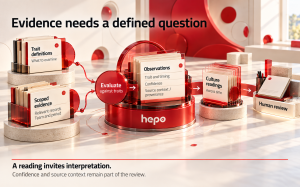
Evaluate scoped operational evidence against your trait definitions and inspect the observations, confidence, and source context that feed culture readings.
Manage the people, work, events, communication, knowledge, and relationships that support HEPO's three offerings alongside existing business systems.
Understand the boundaries between cultural readings, personal participation records, evidence access, and the human decisions that follow.
The management method behind HEPO's six P&C modules: define meaningful practices, examine evidence, retain human judgment, and review development outcomes.
Design development campaigns, organize employees' programmes, and connect milestones, work, learning materials, feedback, and approved recognition.
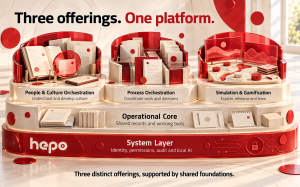
Bring evaluated observations into composite cultural readings, examine trends and confidence, and identify patterns for a responsible person to investigate.
Connect voluntary check-ins, assessments, wellbeing indicators, recurring practices, and impact review to the next people-development decision.