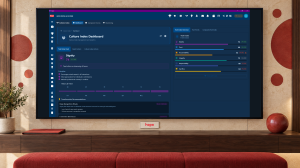
People & Culture Orchestration
Six connected software modules help you define cultural traits, examine evidence, interpret patterns, organize development, and review outcomes.

Understand and develop organizational culture, coordinate business processes, and explore work through simulation and games on one software platform.
HEPO is an enterprise software platform for understanding and developing organizational culture, coordinating business processes, and exploring work through simulation and games.
It gives people practical ways to define what good work means in their organization, examine evidence of how work happens, decide what needs attention, and carry those decisions into action. Its management philosophy informs those tools. The tools are the means of putting the ideas to work.
A People & Culture team needs more than employee records to develop a culture. It needs a shared vocabulary, relevant evidence, a way to interpret patterns, and a way to follow through on development decisions.
HEPO connects six modules to support that work. Your organization adapts the trait definitions; the evaluation engine reads evidence against them; culture indices show patterns and their movement over time. Recommendations help a responsible person consider a response. Campaigns and programmes organize development, and Flourish & Wellbeing helps the organization review what follows.
The practical output is a connected account of definitions, observations, recommendations, development work, and outcomes. People retain responsibility for interpreting it and deciding what to do.
Explore People & Culture Orchestration →
A quotation, approval, or exception often needs information and decisions from several people and systems. HEPO defines and runs that path: gathering relevant evidence, routing work, executing permitted steps, and bringing decisions to the people authorized to make them.
The process owner can examine how the work moved, where it waited, and what evidence supported a decision. Execution and evaluation serve different purposes: the orchestrator carries out the defined work; process analytics helps people assess its performance and consider improvements.
Explore Process Orchestration →
Some situations become clearer when people can explore them together. FlowBox makes connected information navigable. A scenario lets a team change permitted inputs and inspect a modeled result. Games give participants choices, feedback, and opportunities to practise.
These experiences help operations leaders, process owners, and development teams explain a situation and examine alternatives. Recorded work, a simulated outcome, and a learning exercise remain distinguishable. Trying a scenario does not change the actual operational records.
Explore Simulation & Gamification →
Consider a team whose work repeatedly waits for review. Process Orchestration can make the review path and its handoffs inspectable. People & Culture Orchestration can help the organization examine relevant patterns against its own definitions of collaboration and responsibility. A simulation can give the team a place to explore a proposed change before deciding whether to apply it.
This is an illustrative use of the platform. The evidence available, the definitions in use, and the suitability of a scenario determine what a team can examine. A pattern starts an investigation; it does not establish a cause or a judgment about a person by itself.
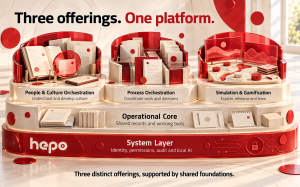
The offerings share operational records, definitions, permissions, and an audit surface. Teams can connect process improvement with people development without treating them as unrelated subjects.
The Operational Core holds the everyday objects: employees, work, communication, calendars, presence, projects, content, and media. These modules provide records and working tools that the wider platform uses.
The System Layer supplies the shared services behind those modules, including identity, permissions, audit, and local AI. It is the technical foundation for the three offerings.
HEPO works alongside existing business systems. Your ERP can remain the system of record for transactions, inventory, and financial information. Integration brings agreed information into HEPO for the work you choose to support; the connection and its scope are part of implementation.
The deployment approach keeps the platform and AI processing on your infrastructure. The architecture and security explanation describes the boundaries technical evaluators need to examine.
The Solutions collection shows how HEPO's capabilities relate to recognizable management situations. Ethical Management is one worked application, with its own vocabulary, diagnostic patterns, and examples. Organizations can consider that framework when it fits their purpose.
Implementation connects the software to your operation: agree the first use, adapt the definitions, scope the evidence and integrations, and establish who owns decisions. Delivery partners bring the relevant management and implementation experience to that work.
Six connected software modules help you define cultural traits, examine evidence, interpret patterns, organize development, and review outcomes.
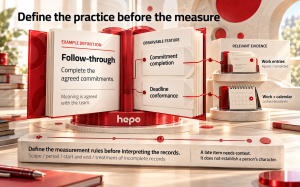
Adapt and author the traits, observable features, and evidence definitions that HEPO uses to examine your organization's working culture.
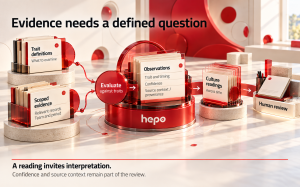
Evaluate scoped operational evidence against your trait definitions and inspect the observations, confidence, and source context that feed culture readings.
Manage the people, work, events, communication, knowledge, and relationships that support HEPO's three offerings alongside existing business systems.
Understand the boundaries between cultural readings, personal participation records, evidence access, and the human decisions that follow.
The management method behind HEPO's six P&C modules: define meaningful practices, examine evidence, retain human judgment, and review development outcomes.
Design development campaigns, organize employees' programmes, and connect milestones, work, learning materials, feedback, and approved recognition.
Bring evaluated observations into composite cultural readings, examine trends and confidence, and identify patterns for a responsible person to investigate.
Connect voluntary check-ins, assessments, wellbeing indicators, recurring practices, and impact review to the next people-development decision.
Generate traceable proposals from configured signals and rules, review their basis, manage the response, and examine the resulting impact.
