FlowBox — Explore the Relationships Behind Your Results
Explore connected work in HEPO: focus on a concern, inspect relationships and source context, and carry a clearer question into scenario rehearsal.

Explore connected information with FlowBox, rehearse changes in separate scenarios, and help people learn through interactive games within HEPO.
Simulation & Gamification is HEPO's offering for exploring connected information, rehearsing possible changes, and learning through interactive experiences. It brings FlowBox, scenario simulation, and games into the same platform used for people, culture, and processes.
An operations team can examine how work connects. A process owner can explore a proposed change in a declared scenario. A facilitator can give participants a situation in which they make choices, observe consequences, and try again. Each experience has its own purpose, information, and controls.
The team already has unfinished work. A customer asks for an addition. One manager sees an opportunity; another sees a deadline at risk. Everyone has a report, but the meeting still depends on someone explaining how the pieces connect.
What is waiting? Which work depends on a review? What changes if more work arrives? Would additional capacity help at the point where it is needed?
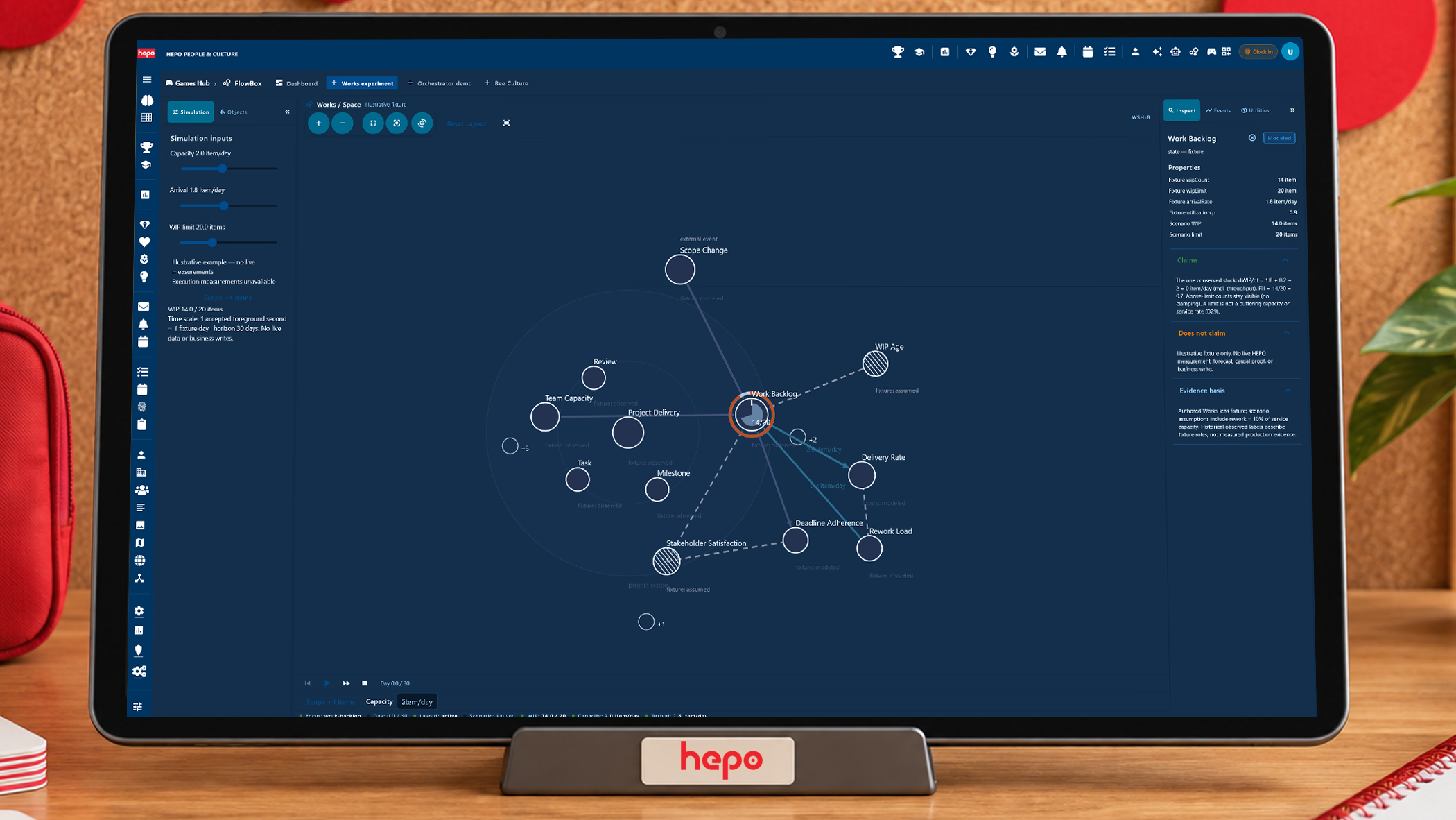
In a suitable experience, the team starts with the work in question, follows relevant relationships, and inspects their meaning. A scenario then gives the proposed change somewhere to be explored: select the starting situation, change a permitted input, and examine the result alongside the model's assumptions. The group has a specific comparison to discuss before deciding whether to change actual work.
This is an illustrative situation. The available sources and the suitability of the model determine what the experience can show.
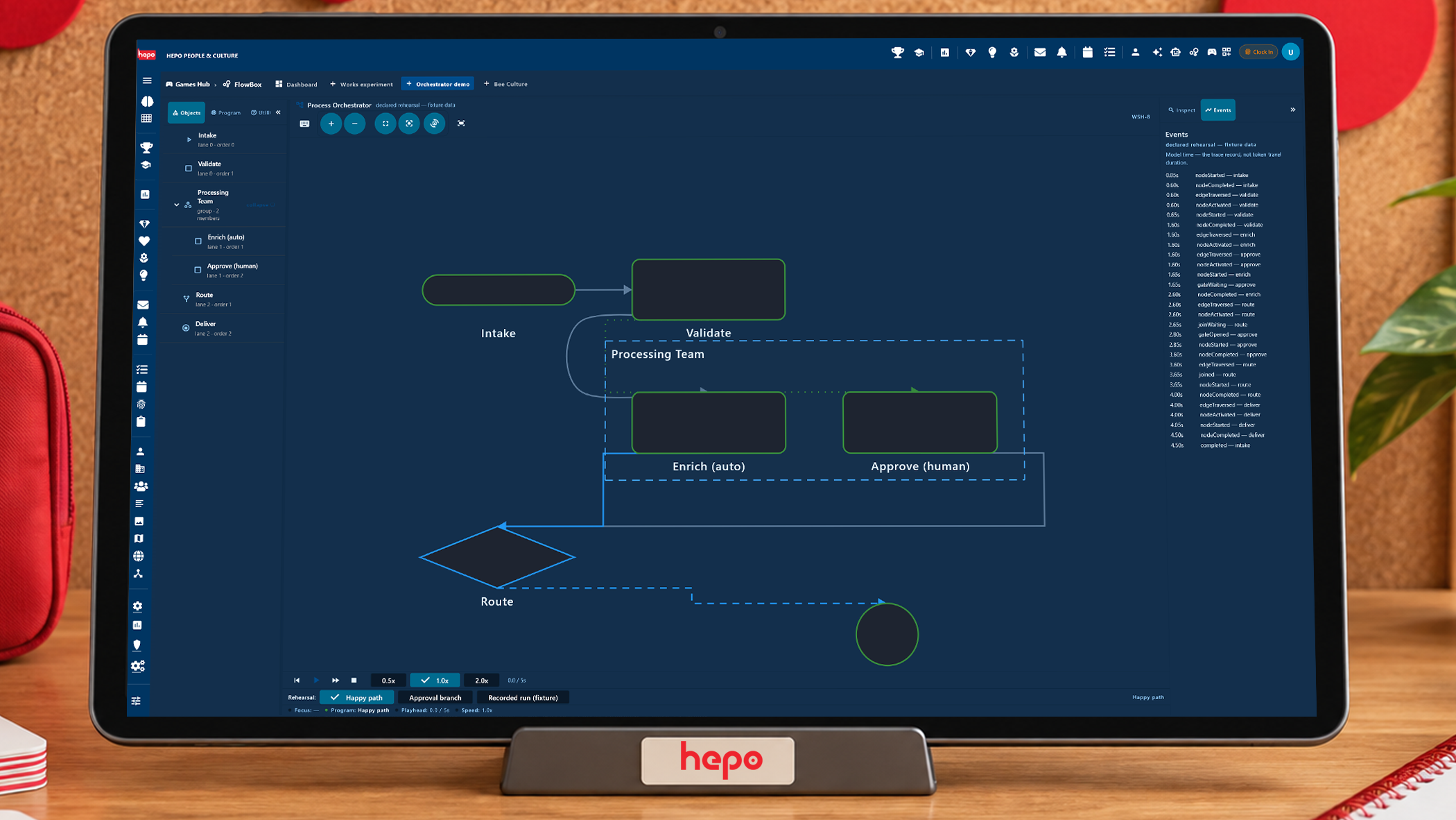
FlowBox makes relationships explorable. Start with a concern, reveal surrounding information, and inspect the values and explanations behind what you see. Follow recorded work through its available steps, or examine the result of a separately identified scenario. Detail remains connected to the wider situation.
Scenario simulation gives a proposed change somewhere to run. Choose a starting situation, adjust permitted inputs, and examine what the model produces. Compare alternatives and bring relevant assumptions into the discussion. Scenario state remains separate from actual operational records.
Games & Gamification invites learning through choices and feedback. A new colleague might practise a process; a group might examine a shared situation. Participants act, observe consequences, and discuss what they learned. The activity can contribute to a development programme without turning game performance into a judgment of character or professional competence.
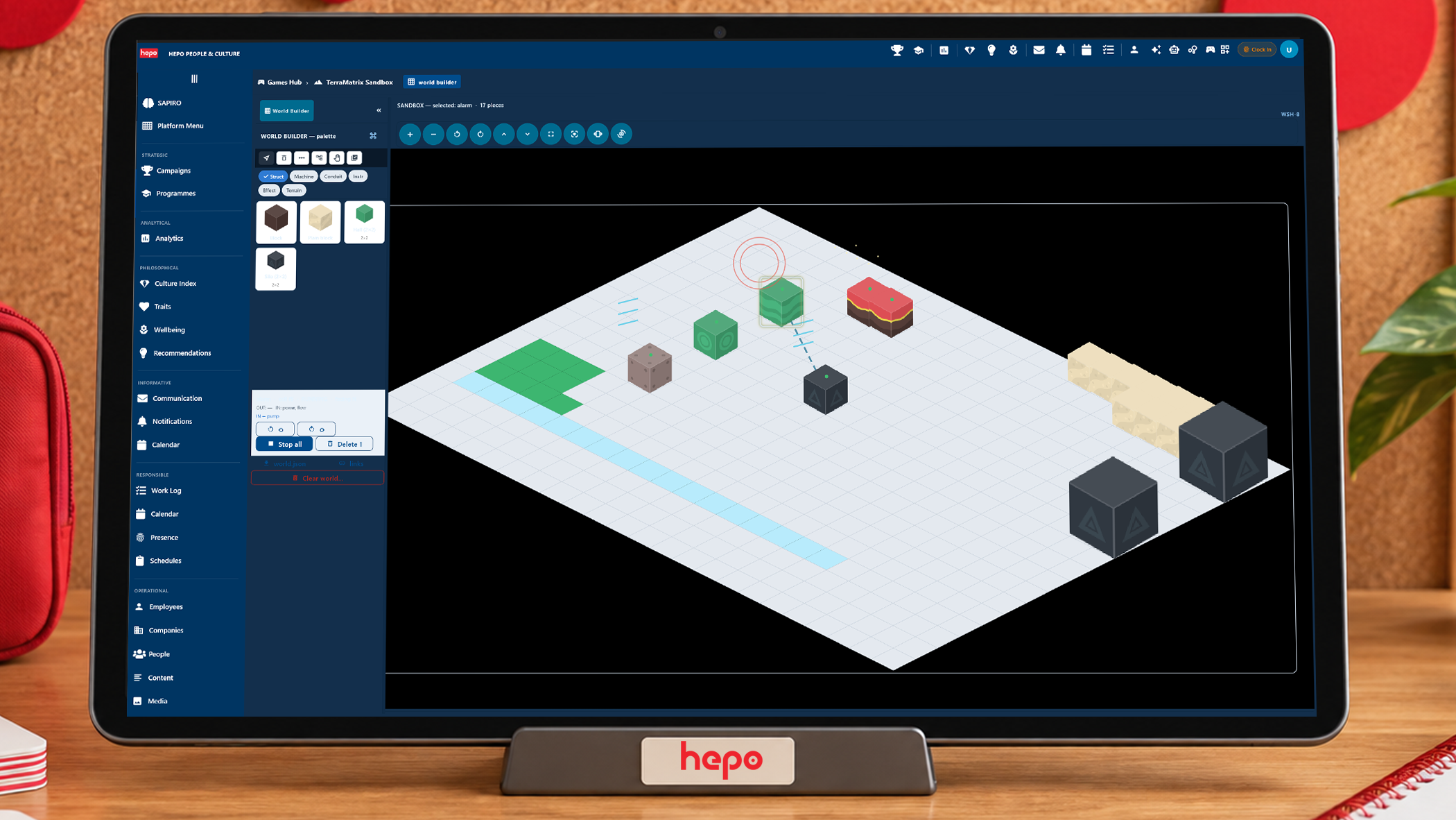
Some questions are easier to understand as connections. Others benefit from a place, an arrangement, or an activity you can follow. The experience uses a representation appropriate to its purpose:
| Environment | What it helps people explore |
|---|---|
| Space | Relationships, grouping, and relative magnitude around a subject |
| Abstract Graph | Sequences, branches, dependencies, and the paths work follows |
| World | Objects and interactions within a coherent spatial setting |
| City | Places, routes, and connections across a wider operation |
| Venue | Activities within an office, factory, construction site, or other setting |
A process owner following an approval path and a facilitator explaining activity inside a venue need different views. Both need clear meanings and a way to inspect the detail. Explore the perspectives →
Begin with a question, the information available to examine it, and the decision or learning purpose. A scenario also needs a suitable model, declared assumptions, and agreed inputs. A game needs a clear activity and a useful discussion of its outcomes.
Each experience has its own dataset, objects, and interface within HEPO. Familiar navigation helps participants focus on the question. View controls change how someone looks at a situation; scenario controls change the experiment. Inspection provides detail without requiring the group to abandon the wider view.
The useful result may be a clearer account of a dependency, a comparison between scenarios, or a shared lesson from an activity. A reusable experience can reduce the need to reconstruct the same explanation from spreadsheets, diagrams, and slides each time. Preparation still matters: its data and assumptions must fit the use.
Recorded execution describes the available account of what happened. A modeled scenario shows an outcome under stated assumptions. A learning exercise gives participants an experience to discuss. These are different sources of understanding, and none should silently stand in for another.
Exploring a view does not rewrite operational records. A decision to change actual work follows the organization's permissions and approvals. Understand the results →
Process Orchestration supplies the context of work and decisions. People & Culture Orchestration supplies the context of development and participation. Simulation & Gamification helps people explore and rehearse situations connected to both. Achievement Campaigns retain ownership of development journeys, milestones, and recognition when a game supplies one of their activities.
Bring us one situation your team needs to understand or practise.