HEPO — Software for People, Culture and Processes
Understand and develop organizational culture, coordinate business processes, and explore work through simulation and games on one software platform.

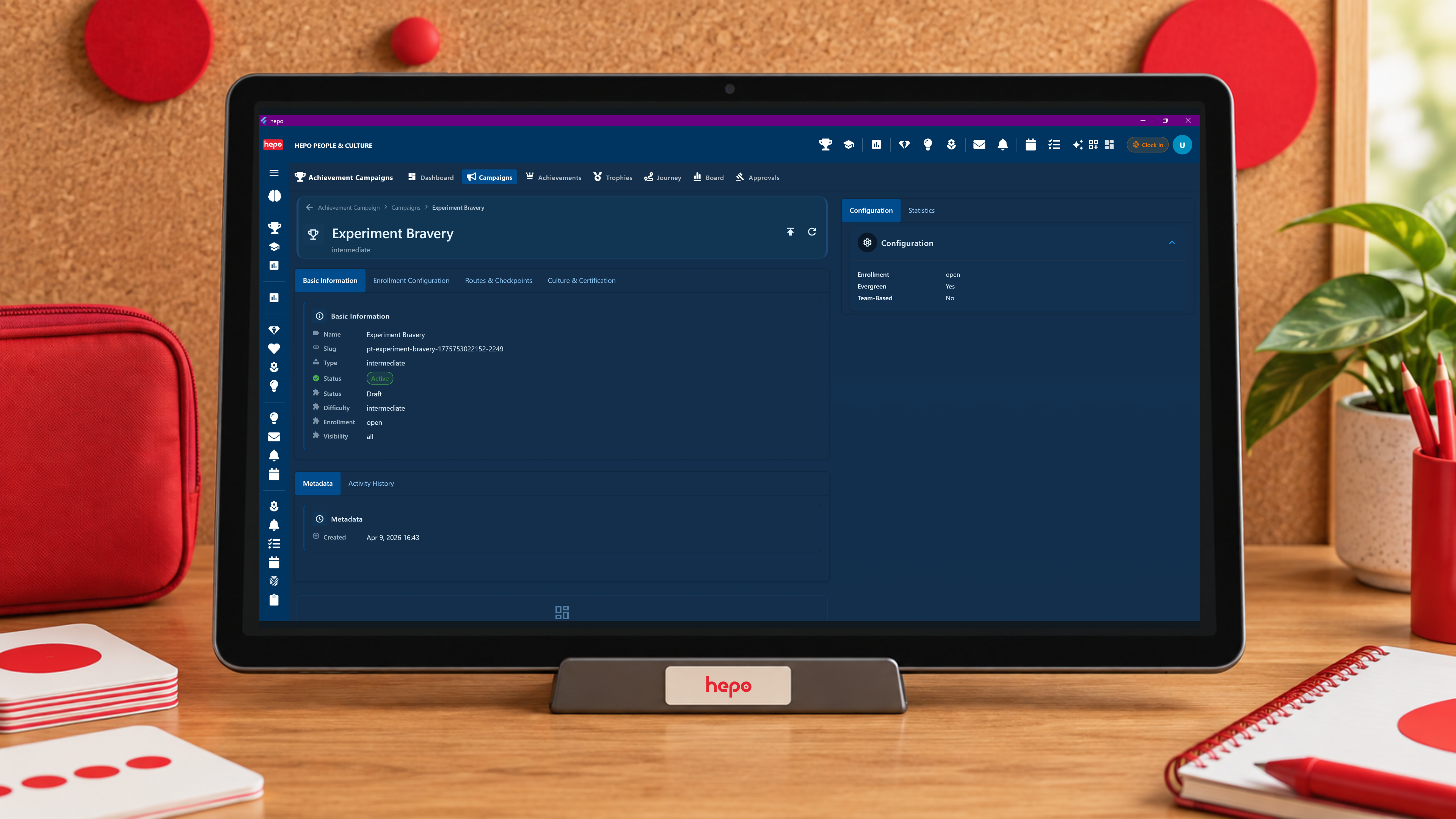
Design development campaigns, organize employees' programmes, and connect milestones, work, learning materials, feedback, and approved recognition.
Achievement Campaigns & Programmes is the part of HEPO that turns a development decision into an organized journey. People & Culture teams configure campaigns; employees participate through programmes with milestones, assigned work, feedback, progress, and recognition.
A campaign defines the shared opportunity and its arrangements. A programme is the journey a participant undertakes through enrolment or assignment. Keeping both visible lets the organization manage the design while people follow their own progress.
The team examining reliable handoffs decides to practise a clearer way of making and completing commitments. The decision may follow a recommendation, or the organization may establish the campaign as part of its development plan.
The campaign designer specifies the activities, milestones, completion criteria, and participation arrangements. An employee joins or is assigned a programme, carries out the work, receives feedback, and can see the steps ahead and those completed.
For example, the journey might include reviewing the agreed handoff practice, applying it in a suitable piece of work, and discussing the result with a mentor. This illustrates how the existing campaign structure can organize development; it is not a preconfigured course promised with every installation.
| Arrangement | What the organization decides |
|---|---|
| Template and purpose | The development aim and repeatable shape of the journey |
| Milestone route | The sequence, checkpoints, and work involved |
| Completion criteria | What counts as finishing an activity or the journey |
| Difficulty | A suitable level, from beginner through expert |
| Enrolment | Open, invitation-based, or cohort-based participation |
| Recognition | The achievement and trophy arrangements, including publication approvals |
The campaign gives development a beginning, a sequence, and a completion people can understand. An open campaign supports voluntary enrolment; an assigned programme records a different route into participation. Neither distinction should disappear behind a generic attendance count.
The participant's journey connects milestones and progress with the work needed to complete them. Calendar events can carry dates and reviews; communication threads carry feedback and recognition. Learning content, videos, and other media provide the materials used along the way.
The employee-facing experience includes journey browsing, registration, milestone and path views, progress, and collected trophies. Mentors and other participants connect through the programme's relationships. A participant can understand what to do next and why it belongs in the journey.
These programmes use HEPO's shared work and collaboration foundations. They are connected to employee records, projects, work, calendars, content, media, and communication rather than standing apart as isolated learning records.
An achievement describes an accomplishment and its criteria; an earned trophy records recognition associated with it. Trophy tiers include bronze, silver, gold, and platinum. The organization decides what those tiers mean in its own campaigns.
The board brings earned entries together, and the approval workflow governs their publication. Completing an activity, earning recognition, and making an entry visible are related but distinct events. The organization owns what is recognized and what is shared.
Personal progress and earned achievement are not culture-index verdicts on a person's worth. Where a campaign uses comparison or competition, participation and the basis of that comparison need to be clear. The development purpose should remain understandable to the people taking part.
A programme can include an activity from Games & Gamification. The game supplies a situation, choices, consequences, and feedback. The campaign supplies the wider journey and governs milestones and recognition.
Simulation & Gamification is a full HEPO offering with uses beyond campaigns, including exploring connected information and rehearsing scenarios. A game result should not be treated as a personality assessment or proof of professional competence.
The reason for organizing a journey is practical: people need opportunities to apply, review, and develop a practice over time. Completion records help show participation, while later evidence helps the organization consider what the work achieved.
The World Economic Forum's 2023 report placed substantial emphasis on reskilling and on-the-job learning over 2023–2027. It provides context for continuing development, rather than evidence of an outcome produced by HEPO. Read the original skills outlook.
The organization defines campaigns and recognition. Consultants help turn the development aim into a useful sequence. Employees and mentors undertake the work and contribute feedback. Implementers configure participation, milestones, relationships, and approvals; the delivery partner supports the programme's lifecycle.
The next step is to review outcomes through Flourish & Wellbeing. Completing a programme establishes that its criteria were met; the later review asks what changed and what the organization should do next.
Next: Flourish & Wellbeing → · Return to the Recommendation Framework →
Bring us a development decision that needs a practical journey.
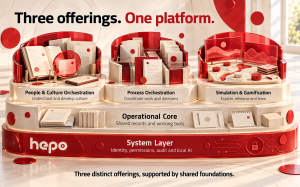
Understand and develop organizational culture, coordinate business processes, and explore work through simulation and games on one software platform.
Six connected software modules help you define cultural traits, examine evidence, interpret patterns, organize development, and review outcomes.
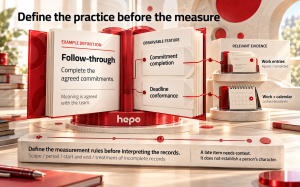
Adapt and author the traits, observable features, and evidence definitions that HEPO uses to examine your organization's working culture.
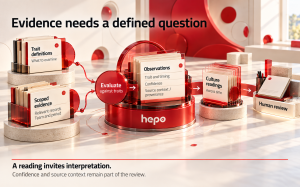
Evaluate scoped operational evidence against your trait definitions and inspect the observations, confidence, and source context that feed culture readings.
Manage the people, work, events, communication, knowledge, and relationships that support HEPO's three offerings alongside existing business systems.
Understand the boundaries between cultural readings, personal participation records, evidence access, and the human decisions that follow.
The management method behind HEPO's six P&C modules: define meaningful practices, examine evidence, retain human judgment, and review development outcomes.
Bring evaluated observations into composite cultural readings, examine trends and confidence, and identify patterns for a responsible person to investigate.
Connect voluntary check-ins, assessments, wellbeing indicators, recurring practices, and impact review to the next people-development decision.
Generate traceable proposals from configured signals and rules, review their basis, manage the response, and examine the resulting impact.