HEPO — Software for People, Culture and Processes
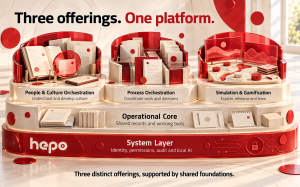
Understand and develop organizational culture, coordinate business processes, and explore work through simulation and games on one software platform.

Connect voluntary check-ins, assessments, wellbeing indicators, recurring practices, and impact review to the next people-development decision.
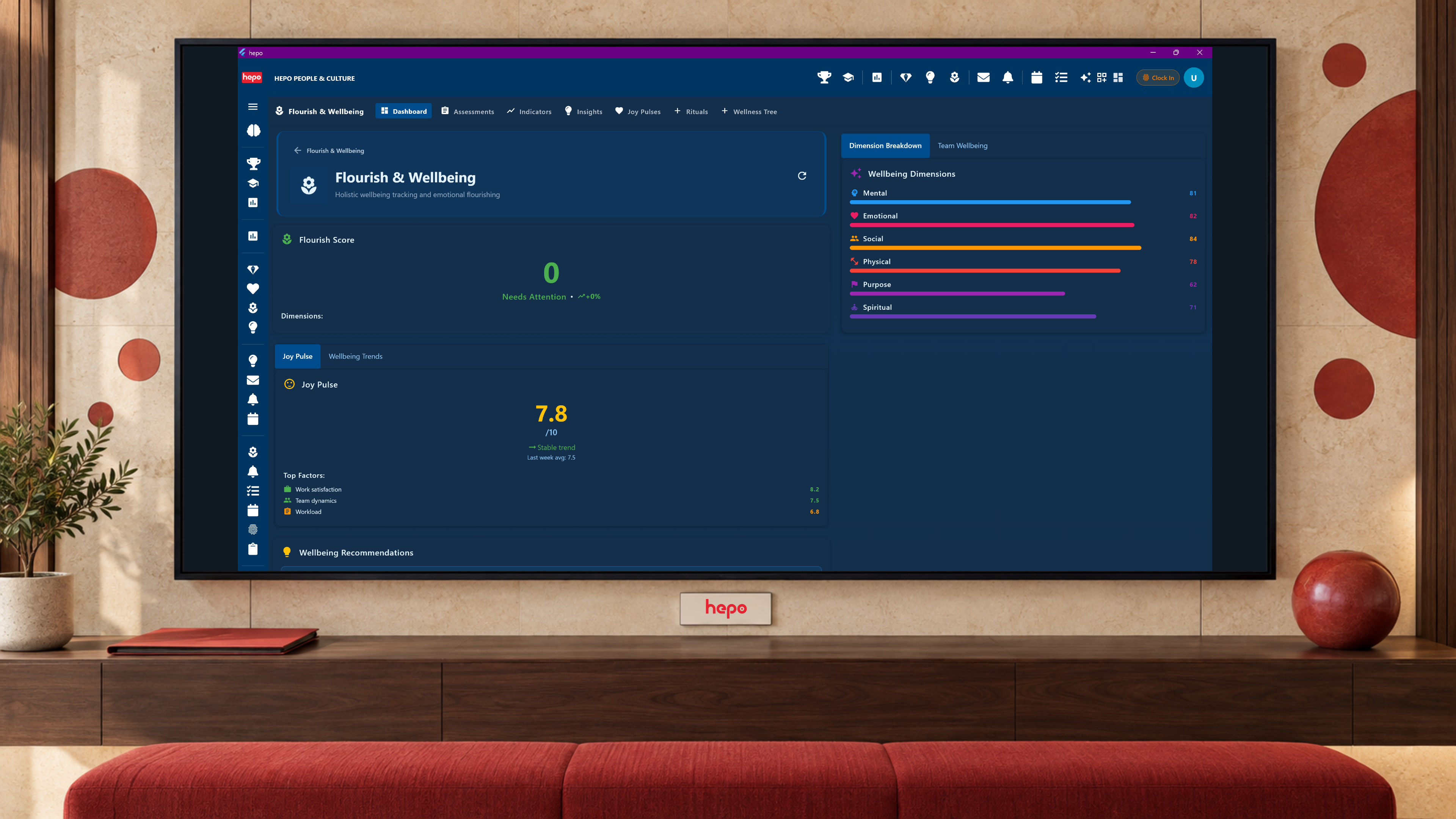
Flourish & Wellbeing is HEPO's module for examining wellbeing and the outcomes of development work. It brings together check-ins, assessments, a structured view of wellbeing measures, indicators, insights, and recurring practices. Impact records from the recommendation cycle add context about what followed an action.
People & Culture owners use that information with participants and delivery partners to review the organization's aims and decide what needs attention next. This closes the six-module sequence by bringing outcomes back into the conversation about definitions, evidence, and development.
The team practising reliable handoffs completes its programme. The organization can review participation and progress, examine later evidence of the working practice, and consider what people report about their experience.
These sources answer different questions. Programme completion describes the journey undertaken. A subsequent cultural reading describes the pattern found in the available evidence. Voluntary check-ins and assessments add participants' accounts. Reading them together gives the owner more context for the next decision.
A changed score does not establish that the programme caused the change. An unchanged score does not erase what participants experienced. The useful task is to investigate the relationship and decide whether to continue, adapt, or reconsider the work.
| Capability | Its purpose |
|---|---|
| Joy pulses | Brief, voluntary check-ins that contribute to understanding workplace experience over time |
| Assessments | Structured wellbeing questions and periodic reviews that complement shorter check-ins |
| Wellness tree | A navigable organization of wellbeing dimensions, indicators, and the signals that inform them |
| Indicators | Measures and trends relevant to the selected wellbeing questions |
| Insights | Interpretations for examination alongside the underlying information |
| Rituals | Defined, recurring practices with their own purpose and cadence |
The wellness tree organizes the measures themselves. It helps a reviewer follow how a broad wellbeing subject relates to dimensions, indicators, and signals. It should not be read as a ranking of employees.
Implementation establishes the available data, configured measures, assessment schedule, and practices for the intended use. Those choices determine what the review can show; the module's vocabulary does not mean every organization receives the same automatic reading.
Work records cannot supply every part of someone's experience. Voluntary pulses and structured assessments offer another source of understanding. Their questions, cadence, and audience need to be clear to participants.
Reported experience remains distinguishable from operational evidence and human-assigned attributes. It can inform the discussion without being treated as a hidden cultural score. Access to contributions and the form of any aggregate reading belong in the organization's governance of the use.
Visibility Without Surveillance explains the distinction between a cultural reading, personal participation, and the decisions people make from them.
The recommendation cycle can record a pre-action score, a later score, their difference, and an indication of detected behavior change. This gives the owner a traceable comparison to consider alongside programme activity, wellbeing information, and changes in the work itself.
The review may identify a useful practice to continue. It may show that the response did not address the question, or that the definition and observation scope need further work. Those findings inform the next cycle; they do not automatically rewrite the organization's aims.
In the method behind HEPO, flourishing concerns the relationship between purpose, action, and the experience of work. Your organization must make that meaning concrete enough to examine. A desired pattern in one setting may have a different place in another.
The original garden analogy captures this ownership: what belongs in a vegetable garden differs from what belongs in a rose garden. The analogy explains who chooses the aim. The software work is more specific: establish definitions, gather appropriate evidence, consider experience, and review outcomes.
The Ethical Management treatment of flourishing develops the philosophical account within the Solutions collection. This module provides the operational place for wellbeing and outcome review across the P&C sequence.
Participants contribute experience and feedback. The People & Culture owner decides what the review means for the next development cycle. Consultants help interpret patterns in context; implementers configure measures, schedules, and the connections between records. The delivery partner supports the organization through review and handover.
If the team changes its understanding of reliable handoffs, it returns to the Trait Catalogue. If the definition still fits but the activity needs improvement, it revisits the programme. The review connects to the next piece of work rather than ending with a completed dashboard.
Return to the Trait Catalogue → · The full P&C method → · Achievement Campaigns & Programmes →
Tell us what you need to understand after a development initiative.
Understand and develop organizational culture, coordinate business processes, and explore work through simulation and games on one software platform.
Six connected software modules help you define cultural traits, examine evidence, interpret patterns, organize development, and review outcomes.
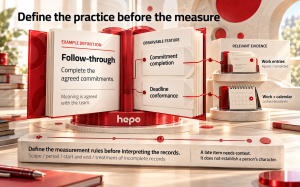
Adapt and author the traits, observable features, and evidence definitions that HEPO uses to examine your organization's working culture.
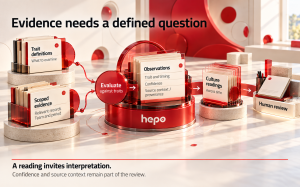
Evaluate scoped operational evidence against your trait definitions and inspect the observations, confidence, and source context that feed culture readings.
Manage the people, work, events, communication, knowledge, and relationships that support HEPO's three offerings alongside existing business systems.
Understand the boundaries between cultural readings, personal participation records, evidence access, and the human decisions that follow.
The management method behind HEPO's six P&C modules: define meaningful practices, examine evidence, retain human judgment, and review development outcomes.
Design development campaigns, organize employees' programmes, and connect milestones, work, learning materials, feedback, and approved recognition.
Bring evaluated observations into composite cultural readings, examine trends and confidence, and identify patterns for a responsible person to investigate.
Generate traceable proposals from configured signals and rules, review their basis, manage the response, and examine the resulting impact.