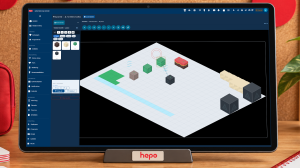
Simulation & Gamification
Explore connected information with FlowBox, rehearse changes in separate scenarios, and help people learn through interactive games within HEPO.

Follow three illustrative HEPO sessions: delivery pressure, process delays, and shared learning, with preparation, participant actions, and useful next steps.
HEPO's Simulation & Gamification offering can support three different kinds of session: exploring connected work, examining a proposed change, and practising through an activity. These examples show what participants prepare, do, and take into the next discussion or decision.
A useful first simulation begins with a question people already care about. It may concern a delivery commitment, a repeated process delay or an activity that colleagues need to understand together.
The following examples are illustrative. They show how a session can work, what it helps people discuss and what needs to be prepared. They are not customer case studies or promises of particular outcomes.
The situation. A project is approaching a deadline when an additional request arrives. Unfinished work is already accumulating. The team needs to discuss the request with a clearer view of incoming work, capacity and existing commitments.
What people do. Open the Works experience in FlowBox and focus on the backlog. Explore its available connections, inspect quantities and distinguish the work currently waiting from the limit the team has set. Examine the relevant capacity and arrival assumptions. Then open a separate scenario to explore the additional request over an agreed period.
What becomes visible. The group can inspect the proposed change and its modeled consequences in context. It can compare an increase in capacity with a change in incoming work, then ask which assumptions make each alternative plausible. The original operational records remain unchanged.
What the session supports. A more specific discussion about scope, capacity and timing. The group can identify the quantities it needs to verify before making a commitment and carry an agreed decision into its ordinary approval process.
What to prepare. Relevant work data, a clear time period, consistent units, a suitable scenario model and someone who can explain its assumptions. Include the additional request as an explicit input rather than hiding it inside a revised starting figure.
Explore FlowBox → · Rehearse a change →
The situation. A process finishes, but some runs take much longer than others. A summary gives the total elapsed time. The owner needs to understand the available evidence about the path through the work.
What people do. Open a recorded execution in an abstract Graph. Follow its reported steps, pause at a handoff and inspect waits, branches or repeated attempts. Discuss what the record actually shows. If a proposed change needs examination, move into a separately identified rehearsal with the relevant assumptions.
What becomes visible. The path and the information attached to it provide a common reference for the discussion. Missing events remain visible as gaps. A rehearsal shows a possible sequence under declared conditions; it remains distinguishable from recorded execution.
What the session supports. A focused investigation of where more information is needed and which change deserves further examination. Colleagues can discuss a particular handoff instead of relying on conflicting recollections of the whole process.
What to prepare. Authorized execution records, meaningful step identities, the available timing information and a description of known gaps. A rehearsal additionally needs a defined process and the conditions it is intended to explore.
Understand playback and results → · See Process Orchestration →
The situation. People understand their own responsibilities but find it harder to explain how their decisions affect the next person. A presentation introduces the procedure; the facilitator wants participants to practise a concrete situation together.
What people do. Enter a prepared activity with a clear objective and defined choices. A Graph can emphasise sequence; a World or Venue can make the objects and setting meaningful. Participants make decisions, inspect the consequences and pause to explain their reasoning. They can repeat the activity with a different approach.
What becomes visible. The group shares a situation it can refer to directly. A missed piece of information, an assumed responsibility or a misunderstood handoff becomes something to discuss within the exercise. Feedback concerns the activity and its rules.
What the session supports. A discussion grounded in participation, followed by another opportunity to practise. Where the activity belongs to a development programme, Achievement Campaigns can provide the surrounding journey and recognition.
What to prepare. A learning objective, an appropriate example dataset, understandable rules and feedback, and a facilitator's discussion prompts. Agree what the exercise can demonstrate and what requires evidence from actual work.
Explore Games & Gamification → · See Achievement Campaigns →
| Session | A useful result to take into the next conversation | Who takes responsibility next |
|---|---|---|
| Delivery pressure | An explained comparison, with changed inputs and assumptions identified | The owner deciding scope, capacity, or timing |
| Process delay | A particular handoff to investigate and the supporting record or known gap | The process owner and relevant participants |
| Shared learning | An articulated lesson and a further practice opportunity | The participant, facilitator, or programme owner |
These are outcomes of the discussion, not a promise that each experience exports a particular report or automatically creates a follow-up task. The organization carries the result into the appropriate review or development process.
Keep the initial question bounded. Identify who will use the experience and ask what they should be able to notice, explain or practise by the end. Choose the representation and information around that goal.
This makes the value practical to assess: whether the team can follow the path, explain a relationship, compare a proposal or discuss a decision with clearer context. It also makes preparation more focused. A useful first experience can become a reference your team returns to as its questions develop.
Explore connected information with FlowBox, rehearse changes in separate scenarios, and help people learn through interactive games within HEPO.
Explore connected work in HEPO: focus on a concern, inspect relationships and source context, and carry a clearer question into scenario rehearsal.
Choose among Space, Graph, World, City, and Venue around the question, information, actions, and explanations your team needs.
Choose a starting situation, adjust permitted inputs, and compare modeled or rehearsed alternatives with their assumptions and authority boundaries clear.
Practise decisions through interactive activities, feedback, and discussion; connect games to development journeys without turning results into personal judgments.
Interpret operational information, playback, scenarios, and exercise feedback using their sources, units, time, assumptions, and decision context.