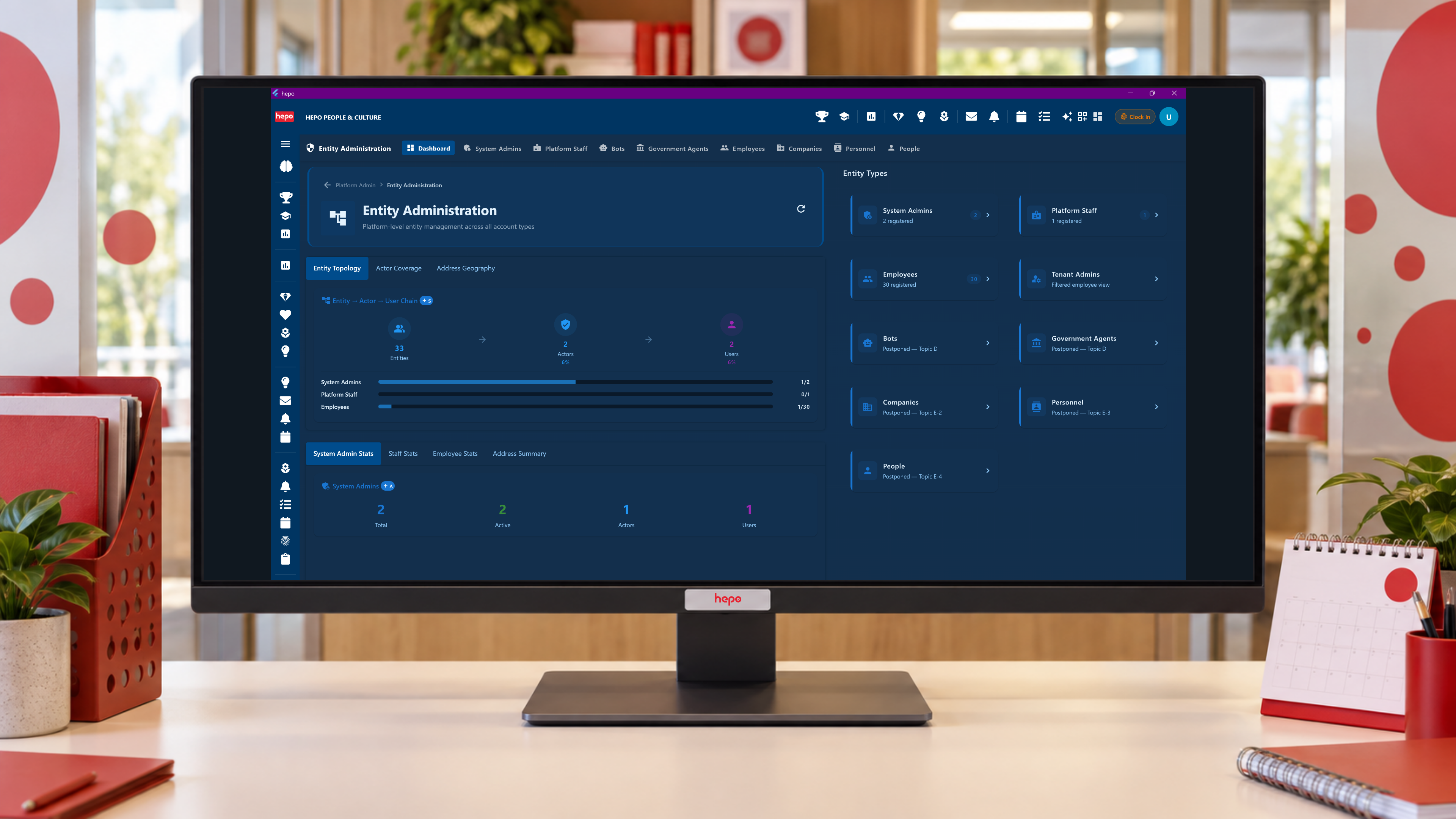
Operational Core — The Records Behind the Work
Manage the people, work, events, communication, knowledge, and relationships that support HEPO's three offerings alongside existing business systems.

Connect internal participants, external people, companies, and their personnel to work while keeping identity records and access decisions distinct.
Accounts is HEPO's identity and participation layer for the people and organisations the business recognises. It connects internal actors with external people, companies, and company personnel, while account administration handles the relevant registration, authentication, recovery, and access lifecycle.
An account record helps answer who is involved and in what capacity. Permission configuration determines what an authenticated participant may do. Recording a relationship does not grant access on its own.
The business recognises a consultant and the company they work for. Their connection to a project can be represented alongside the internal team. Where participation is enabled, the administrator establishes the account and the specific access needed for the engagement.
The project owner can then relate work and communication to the participant. When the engagement changes, the relationship and access arrangements need review. The company record, the person's business relationship, and their ability to sign in remain distinct concerns.
| Subject | What the record contributes |
|---|---|
| Employees and staff | Internal participation linked to the organisation's people and responsibilities |
| Outside individuals | A reference for visitors, consultants, and other recognised participants |
| Companies | A governed record of the organisation with which the business deals |
| Company personnel | A person's relationship to an external company and the work they share |
| Account lifecycle | Administration of access and identity states for enabled participants |
The original 360-degree idea means examining an account through its relevant records and relationships. It does not mean unrestricted visibility into every person's information. The view depends on the configured capability, available links, and the viewer's authority.
The employee registry provides the internal people anchor. Organization describes units and positions. Relationships connects the recognised participant to a company, project, or other relevant record.
User-initiated work should retain the actor context needed to examine what happened. External integrations and scheduled work also have execution identities to configure. The Security Model explains access and accountability across those paths.
The organisation names who owns external relationships and who approves access. Implementers establish the relevant account types, processes, and permissions. A useful demonstration follows a consultant through an allowed shared task and a denied unrelated request, then examines how access is changed when the engagement ends.
That gives internal and external participation a defined place in the operating model supporting P&C, Process, and collaborative learning.